Social interactions in isolated, confined, and extreme environments: A study of Antarctic winter teams using wearable sensors
Abstract
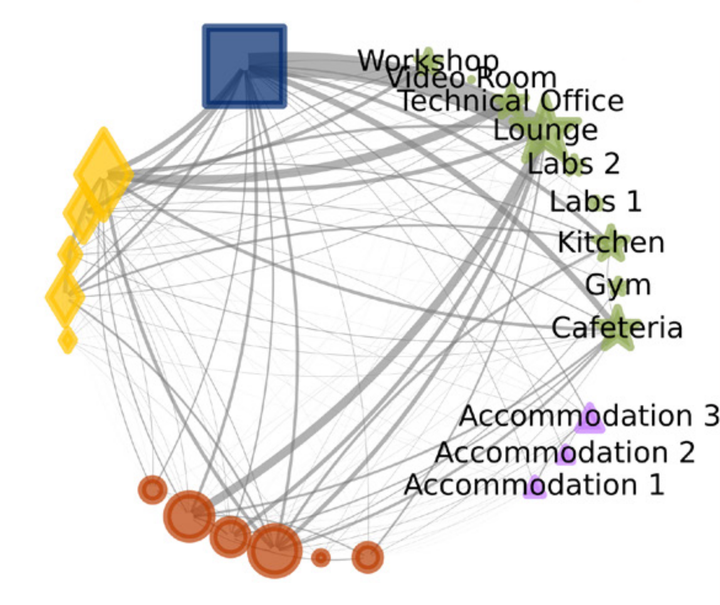
Long-duration space missions expose crews to extreme psychological and social stressors due to prolonged isolation and confinement. To examine how such conditions impact individual and team functioning, we studied a 10-mo Antarctic overwintering mission at Concordia Station, an analog for spaceflight, using self-report measures and wearable proximity sensors. Twelve crew members were assessed at four time-points. Results revealed a progressive increase in feelings of loneliness and conflict, while cohesion and individual performance declined. Close-range interactions were positively associated with conflicts and paranoid thoughts and negatively related with individual performance, suggesting that more frequent contact did not equate to social support. Social interactions became increasingly clustered within national groups, highlighting the risk of social fragmentation and crew polarization. The use of wearable sensors proved feasible for long-term use in extreme environments. These findings underscore the importance of monitoring psychosocial functioning during extended missions and suggest that close confinement, rather than isolation alone, may trigger interpersonal strain.

Lorenzo Dall'Amico
Postdoctoral fellow
I am currently a postdoctoral fellow at the ISI foundation in Turin, Italy.